Longteng Machinery, a professional manufacturer of slurry pumps


-
SLURRY PUMPLongteng provides reliable slurry pumping solutions for demanding mining, mineral processing and industrial applications, backed by experienced engineering, quality manufacturing and responsive technical support.

-
INDUSTRIESExplore slurry pump applications across mining, mineral processing,dredging, power generation and other demanding industries.
-
RESOURCESPractical resources, guides and case studies to help you select, operate and maintain slurry pumps.
-
ABOUT USLearn about Longteng's slurry pump expertise, manufacturing capabilities, quality control and commitment to reliable pumping solutions.
-

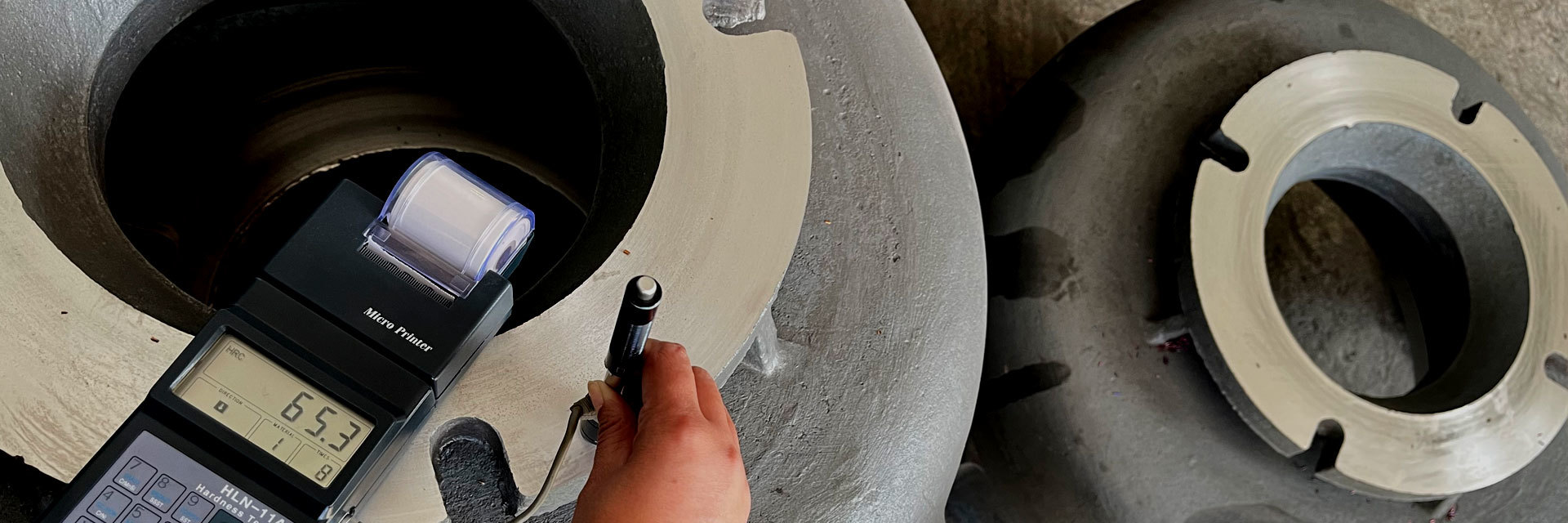
Solution
With strong manufacturing support and real application experience, we deliver practical solutions — not just pumps.
Frequently Asked Questions
Mining Applications of Slurry Pumps
1. Slurry Pump Uses in Mining
Mining operations often deal with abrasive and high-density slurry. Reliable pumping systems are essential to maintain stable production and continuous operation.
Longteng Pump provides solutions for a wide range of mining applications based on Slurry Pump Working Principle.
2. Where Are Slurry Pumps Used?
Slurry pumps are used to transport mixtures of water and solid particles in mining processes.
Common mining areas include:
- Metal mining
- Coal preparation
- Ore processing plants
- Tailings handling
- Water recovery
3. Ore Processing
Ore processing plants use slurry pumps at multiple stages to transport slurry between equipment.
Typical applications include:
- Mill discharge
- Flotation feed
- Thickener underflow
- Tank transfer
These processes rely on correct system design based on Slurry Pump Type Selection Guide.
4. Cyclone Feed
Hydrocyclones require stable flow and pressure for effective separation.
Key requirements include:
- Stable operation
- Wear resistance
- Consistent flow
Proper pump sizing follows Slurry Pump Type Selection Guide.
5. Tailings Handling
After mineral extraction, remaining slurry is transported to storage areas.
Key requirements include:
- High wear resistance
- Long service life
- Stable operation
Maintenance planning is often supported by Slurry Pump Maintenance Guide.
6. Water Recovery
Mining operations require efficient water management systems.
Typical tasks include:
- Water recovery
- Tank cleaning
- Waste slurry transfer
Proper maintenance follows Slurry Pump Maintenance Guide.
7. Coal Preparation
Coal preparation plants use slurry pumps for dense media and slurry transport.
Typical duties include:
- Cyclone feed
- Dense media separation
- Fine coal recovery
Pump selection is based on Slurry Pump Type Selection Guide.
8. Gold and Copper Mining
Gold and copper mining involves abrasive slurry transport during mineral recovery.
Typical duties include:
- Mill discharge
- Flotation feed
- Concentrate transfer
- Tailings transfer
Wear resistance is critical, supported by Slurry Pump Wear Parts Guide.
9. Key Factors to Consider
Before selecting a slurry pump, several factors must be evaluated:
- Slurry properties
- Flow and head requirements
- Wear resistance
- Maintenance needs
Selection decisions follow Slurry Pump Type Selection Guide.
10. Why Choose Longteng Pump
Longteng Pump provides reliable slurry pump solutions for mining industries.
Key advantages:
- Heavy-duty construction
- Wear-resistant materials
- Stable operation
- Easy maintenance
- Customized solutions

How to Choose the Right Slurry Pump for Mining Applications
Mining environments involve complex slurries and continuous equipment operation. Selecting the right slurry pump can reduce wear, prevent downtime, and improve overall efficiency.
1. Understand the Working Conditions
Slurry selection depends heavily on operating conditions.
- Slurry characteristics such as concentration, particle size, and acidity/alkalinity must be evaluated.
- Flow and head requirements should include a safety margin of about 10%.
- Application scenarios include general transfer, tailings discharge, and pond dredging.
These conditions directly influence Slurry Pump Type Selection Guide.
2. Recommended Pump Types
Different applications require different pump structures.
Horizontal Slurry Pump
Horizontal slurry pumps are widely used due to their durability and wear resistance. They are suitable for mineral processing and long-distance transfer.
This type is commonly selected based on Slurry Pump Type Selection Guide.
Submersible Slurry Pump
Submersible slurry pumps operate without shaft sealing and are suitable for slurry pits and sedimentation tanks.
Selection should follow Slurry Pump Type Selection Guide.
Sand and Gravel Pump
Sand and gravel pumps are designed for coarse particles and anti-clogging performance.
Proper application requires reference to Slurry Pump Type Selection Guide.
3. Material Selection Tips
Material selection is critical for pump life and performance.
- High-Chromium Alloy: Suitable for abrasive slurry conditions.
- Rubber Lining: Suitable for fine particle slurry and moderate corrosion conditions.
- Stainless Steel: Suitable for low-concentration corrosive environments.
Material selection is often supported by Slurry Pump Wear Parts Guide.
4. Common Mistakes to Avoid
Many operational issues come from incorrect selection or system design:
- Ignoring flow and head safety margins.
- Using low-quality cast iron components that wear quickly.
- Poor pipeline design with excessive bends or mismatched diameters.
Proper design decisions should follow Slurry Pump Type Selection Guide.
5. Additional Precautions
To improve reliability and efficiency:
- Reserve 15–20% motor power margin.
- Choose pumps with replaceable wear parts for easier maintenance.
- For customized solutions, refer to Slurry Pump Working Principle.

Copper Mine Slurry Pump Lifetime Improved from 2 to 6 Months
Last year we supplied several sets of slurry pumps. This copper mining operation was facing serious wear problems in its slurry transport system.
The slurry contained highly abrasive particles, causing frequent failures of slurry pump wet-end parts.
The client’s biggest challenge was not only the replacement cost, but also the downtime caused by frequent maintenance.
At that time, the average service life of the pump impeller was only around 2 months.
Problem Analysis
After reviewing the operating conditions, several key issues were identified:
- High slurry density and strong abrasiveness
- Particle size larger than expected
- Existing material not suitable for actual working conditions
- Pump selection not aligned with Slurry Pump Type Selection Guide
Although the pump model itself was acceptable, the overall configuration was not optimized for real operating conditions.
Optimization Solution
Instead of replacing the entire system, a targeted optimization approach was applied:
1. Material Upgrade
Wear-resistant components were improved based on Slurry Pump Wear Parts Guide.
2. Pump Configuration Review
System layout and hydraulic configuration were adjusted using Slurry Pump Type Selection Guide.
3. Working Condition Assessment
Operating conditions were re-evaluated according to Slurry Pump Working Principle.
Result
After optimization, performance improved significantly:
- Longer service life
- Lower maintenance frequency
- Reduced operational downtime
- Better overall cost efficiency
Conclusion
In many slurry applications, the main issue is not the pump itself, but the mismatch between slurry conditions, material selection, and operating parameters.
By understanding Slurry Pump Working Principle and applying proper selection guidelines, pump lifetime and system efficiency can be significantly improved.
How to repair the slurry pump?
As a widely used conveying equipment in industries such as mining, metallurgy, power, and coal, the stability and reliability of slurry pumps are crucial to the production process. However, long-term operation and harsh working environments often lead to various malfunctions of slurry pumps. Therefore, mastering the maintenance methods of slurry pumps is of great significance for ensuring the normal operation of equipment and extending its service life. This article will provide a detailed introduction to the maintenance steps, precautions, and common troubleshooting methods for slurry pumps.
Preparation work before maintenance of slurry pump
Before carrying out maintenance on the slurry pump, sufficient preparation work should be done first, including the implementation of safety measures, preparation of maintenance tools, and formulation of maintenance plans.
1. Safety measures: Ensure good ventilation at the maintenance site, wear personal protective equipment such as goggles, masks, gloves, etc., to avoid harm to the body caused by dust, noise, etc. generated during the maintenance process. At the same time, cut off the power and hang a "Do Not Close" warning sign to prevent accidental start-up.
2. Preparation of maintenance tools: Prepare corresponding tools according to different maintenance projects, such as screwdrivers, wrenches, hammers, vernier calipers, micrometers, magnetic gauge holders, dial indicators, etc. For parts that need to be replaced, they should be purchased in advance and their quality checked to ensure they meet the requirements.
3. Maintenance plan formulation: Based on the operating status and maintenance history of the equipment, analyze possible fault points and develop a detailed maintenance plan, including maintenance items, required materials, personnel division, time arrangement, etc.
Dismantling and Inspection of Slurry Pump?
Disassembly is an important part of the maintenance process, and the correct disassembly sequence and inspection method are crucial for the smooth progress of subsequent maintenance work.
1. Disassembly sequence: Disassemble according to the principle of from outside to inside and from top to bottom. First, remove the pipes, valves and other accessories connected to the slurry pump, and then gradually disassemble the pump body, impeller, bearings and other components. During the disassembly process, proper labeling should be done to avoid confusion.
2. Inspection and measurement: Carefully inspect the disassembled components, observe their wear, corrosion, deformation, etc., and use tools such as vernier calipers and micrometers to measure their dimensions and determine whether replacement is necessary. At the same time, check the wear level of vulnerable parts such as bearings and sealing rings, and replace them if necessary.
Treatment method for overheating of slurry pump bearings
The cause of bearing overheating may be poor lubrication, bearing damage, or improper installation. The solution is to check the lubrication condition of the bearings and promptly replenish or replace the lubricating oil; Check the installation of the bearings to ensure that their fit clearance meets the requirements; Damaged bearings should be replaced promptly.
Treatment method for shaft seal leakage of slurry pump
Shaft seal leakage is one of the common faults of slurry pumps, mainly caused by shaft seal wear, uneven sealing surface, or improper installation. The solution is to replace the worn shaft seals to ensure that the sealing surface is flat and smooth; Adjust the installation position of the shaft seal to ensure that the clearance between it and the shaft is appropriate; Check the clamping force of the shaft seal to ensure the sealing effect.
1. Slurry Pump Uses in Mining
Mining operations often deal with abrasive and high-density slurry. Reliable pumping systems are essential to maintain stable production and continuous operation.
Longteng Pump provides solutions for a wide range of mining applications based on Slurry Pump Working Principle.
2. Where Are Slurry Pumps Used?
Slurry pumps are used to transport mixtures of water and solid particles in mining processes.
Common mining areas include:
- Metal mining
- Coal preparation
- Ore processing plants
- Tailings handling
- Water recovery
3. Ore Processing
Ore processing plants use slurry pumps at multiple stages to transport slurry between equipment.
Typical applications include:
- Mill discharge
- Flotation feed
- Thickener underflow
- Tank transfer
These processes rely on correct system design based on Slurry Pump Type Selection Guide.
4. Cyclone Feed
Hydrocyclones require stable flow and pressure for effective separation.
Key requirements include:
- Stable operation
- Wear resistance
- Consistent flow
Proper pump sizing follows Slurry Pump Type Selection Guide.
5. Tailings Handling
After mineral extraction, remaining slurry is transported to storage areas.
Key requirements include:
- High wear resistance
- Long service life
- Stable operation
Maintenance planning is often supported by Slurry Pump Maintenance Guide.
6. Water Recovery
Mining operations require efficient water management systems.
Typical tasks include:
- Water recovery
- Tank cleaning
- Waste slurry transfer
Proper maintenance follows Slurry Pump Maintenance Guide.
7. Coal Preparation
Coal preparation plants use slurry pumps for dense media and slurry transport.
Typical duties include:
- Cyclone feed
- Dense media separation
- Fine coal recovery
Pump selection is based on Slurry Pump Type Selection Guide.
8. Gold and Copper Mining
Gold and copper mining involves abrasive slurry transport during mineral recovery.
Typical duties include:
- Mill discharge
- Flotation feed
- Concentrate transfer
- Tailings transfer
Wear resistance is critical, supported by Slurry Pump Wear Parts Guide.
9. Key Factors to Consider
Before selecting a slurry pump, several factors must be evaluated:
- Slurry properties
- Flow and head requirements
- Wear resistance
- Maintenance needs
Selection decisions follow Slurry Pump Type Selection Guide.
10. Why Choose Longteng Pump
Longteng Pump provides reliable slurry pump solutions for mining industries.
Key advantages:
- Heavy-duty construction
- Wear-resistant materials
- Stable operation
- Easy maintenance
- Customized solutions
Mining environments involve complex slurries and continuous equipment operation. Selecting the right slurry pump can reduce wear, prevent downtime, and improve overall efficiency.
1. Understand the Working Conditions
Slurry selection depends heavily on operating conditions.
- Slurry characteristics such as concentration, particle size, and acidity/alkalinity must be evaluated.
- Flow and head requirements should include a safety margin of about 10%.
- Application scenarios include general transfer, tailings discharge, and pond dredging.
These conditions directly influence Slurry Pump Type Selection Guide.
2. Recommended Pump Types
Different applications require different pump structures.
Horizontal Slurry Pump
Horizontal slurry pumps are widely used due to their durability and wear resistance. They are suitable for mineral processing and long-distance transfer.
This type is commonly selected based on Slurry Pump Type Selection Guide.
Submersible Slurry Pump
Submersible slurry pumps operate without shaft sealing and are suitable for slurry pits and sedimentation tanks.
Selection should follow Slurry Pump Type Selection Guide.
Sand and Gravel Pump
Sand and gravel pumps are designed for coarse particles and anti-clogging performance.
Proper application requires reference to Slurry Pump Type Selection Guide.
3. Material Selection Tips
Material selection is critical for pump life and performance.
- High-Chromium Alloy: Suitable for abrasive slurry conditions.
- Rubber Lining: Suitable for fine particle slurry and moderate corrosion conditions.
- Stainless Steel: Suitable for low-concentration corrosive environments.
Material selection is often supported by Slurry Pump Wear Parts Guide.
4. Common Mistakes to Avoid
Many operational issues come from incorrect selection or system design:
- Ignoring flow and head safety margins.
- Using low-quality cast iron components that wear quickly.
- Poor pipeline design with excessive bends or mismatched diameters.
Proper design decisions should follow Slurry Pump Type Selection Guide.
5. Additional Precautions
To improve reliability and efficiency:
- Reserve 15–20% motor power margin.
- Choose pumps with replaceable wear parts for easier maintenance.
- For customized solutions, refer to Slurry Pump Working Principle.
Last year we supplied several sets of slurry pumps. This copper mining operation was facing serious wear problems in its slurry transport system.
The slurry contained highly abrasive particles, causing frequent failures of slurry pump wet-end parts.
The client’s biggest challenge was not only the replacement cost, but also the downtime caused by frequent maintenance.
At that time, the average service life of the pump impeller was only around 2 months.
Problem Analysis
After reviewing the operating conditions, several key issues were identified:
- High slurry density and strong abrasiveness
- Particle size larger than expected
- Existing material not suitable for actual working conditions
- Pump selection not aligned with Slurry Pump Type Selection Guide
Although the pump model itself was acceptable, the overall configuration was not optimized for real operating conditions.
Optimization Solution
Instead of replacing the entire system, a targeted optimization approach was applied:
1. Material Upgrade
Wear-resistant components were improved based on Slurry Pump Wear Parts Guide.
2. Pump Configuration Review
System layout and hydraulic configuration were adjusted using Slurry Pump Type Selection Guide.
3. Working Condition Assessment
Operating conditions were re-evaluated according to Slurry Pump Working Principle.
Result
After optimization, performance improved significantly:
- Longer service life
- Lower maintenance frequency
- Reduced operational downtime
- Better overall cost efficiency
Conclusion
In many slurry applications, the main issue is not the pump itself, but the mismatch between slurry conditions, material selection, and operating parameters.
By understanding Slurry Pump Working Principle and applying proper selection guidelines, pump lifetime and system efficiency can be significantly improved.
As a widely used conveying equipment in industries such as mining, metallurgy, power, and coal, the stability and reliability of slurry pumps are crucial to the production process. However, long-term operation and harsh working environments often lead to various malfunctions of slurry pumps. Therefore, mastering the maintenance methods of slurry pumps is of great significance for ensuring the normal operation of equipment and extending its service life. This article will provide a detailed introduction to the maintenance steps, precautions, and common troubleshooting methods for slurry pumps.
Before carrying out maintenance on the slurry pump, sufficient preparation work should be done first, including the implementation of safety measures, preparation of maintenance tools, and formulation of maintenance plans.
1. Safety measures: Ensure good ventilation at the maintenance site, wear personal protective equipment such as goggles, masks, gloves, etc., to avoid harm to the body caused by dust, noise, etc. generated during the maintenance process. At the same time, cut off the power and hang a "Do Not Close" warning sign to prevent accidental start-up.
2. Preparation of maintenance tools: Prepare corresponding tools according to different maintenance projects, such as screwdrivers, wrenches, hammers, vernier calipers, micrometers, magnetic gauge holders, dial indicators, etc. For parts that need to be replaced, they should be purchased in advance and their quality checked to ensure they meet the requirements.
3. Maintenance plan formulation: Based on the operating status and maintenance history of the equipment, analyze possible fault points and develop a detailed maintenance plan, including maintenance items, required materials, personnel division, time arrangement, etc.
Disassembly is an important part of the maintenance process, and the correct disassembly sequence and inspection method are crucial for the smooth progress of subsequent maintenance work.
1. Disassembly sequence: Disassemble according to the principle of from outside to inside and from top to bottom. First, remove the pipes, valves and other accessories connected to the slurry pump, and then gradually disassemble the pump body, impeller, bearings and other components. During the disassembly process, proper labeling should be done to avoid confusion.
2. Inspection and measurement: Carefully inspect the disassembled components, observe their wear, corrosion, deformation, etc., and use tools such as vernier calipers and micrometers to measure their dimensions and determine whether replacement is necessary. At the same time, check the wear level of vulnerable parts such as bearings and sealing rings, and replace them if necessary.
The cause of bearing overheating may be poor lubrication, bearing damage, or improper installation. The solution is to check the lubrication condition of the bearings and promptly replenish or replace the lubricating oil; Check the installation of the bearings to ensure that their fit clearance meets the requirements; Damaged bearings should be replaced promptly.
Shaft seal leakage is one of the common faults of slurry pumps, mainly caused by shaft seal wear, uneven sealing surface, or improper installation. The solution is to replace the worn shaft seals to ensure that the sealing surface is flat and smooth; Adjust the installation position of the shaft seal to ensure that the clearance between it and the shaft is appropriate; Check the clamping force of the shaft seal to ensure the sealing effect.
Shijiazhuang Longteng Machinery Co., Ltd
Address: Yudi Industrial Zone, Luancheng District, Shijiazhuang City, Hebei, China.
Phone/Whatsapp:+86-15830152559
Email:info@slurrypump-hb.com


