Longteng Machinery, a professional manufacturer of slurry pumps


-
PRODUCTSOur flawless production capacity, high-quality product performance and professional pre-sale and after-sale service have won Longteng the unanimous recognition from domestic and foreign customers. Also thanks to the trust and recognition of our customers from dozens of countries and regions, we are becoming one of the most important slurry pump suppliers in China.

-
-
RESOURCES
-
ABOUT USShijiazhuang Longteng Machinery Co., Ltd. is a high-tech enterprise integrating research & development, design, production and sales of slurry pumps with more than 20 years of mature experience. On the basis of introducing and absorbing advanced foreign technologies, our factory has formed a product system with perfect performance and wide coverage, among which SH SM SHH SL SG SGH and SV series products are especially widely used, and through their practical application in metallurgy, mining, power plant, chemical industry, etc., it has been verified that these series of products have the features of reasonable product structure, stable operation, high efficiency, energy saving, long service life, etc., which can perfectly replace Warman AH M HH L G GH SP series products.
-

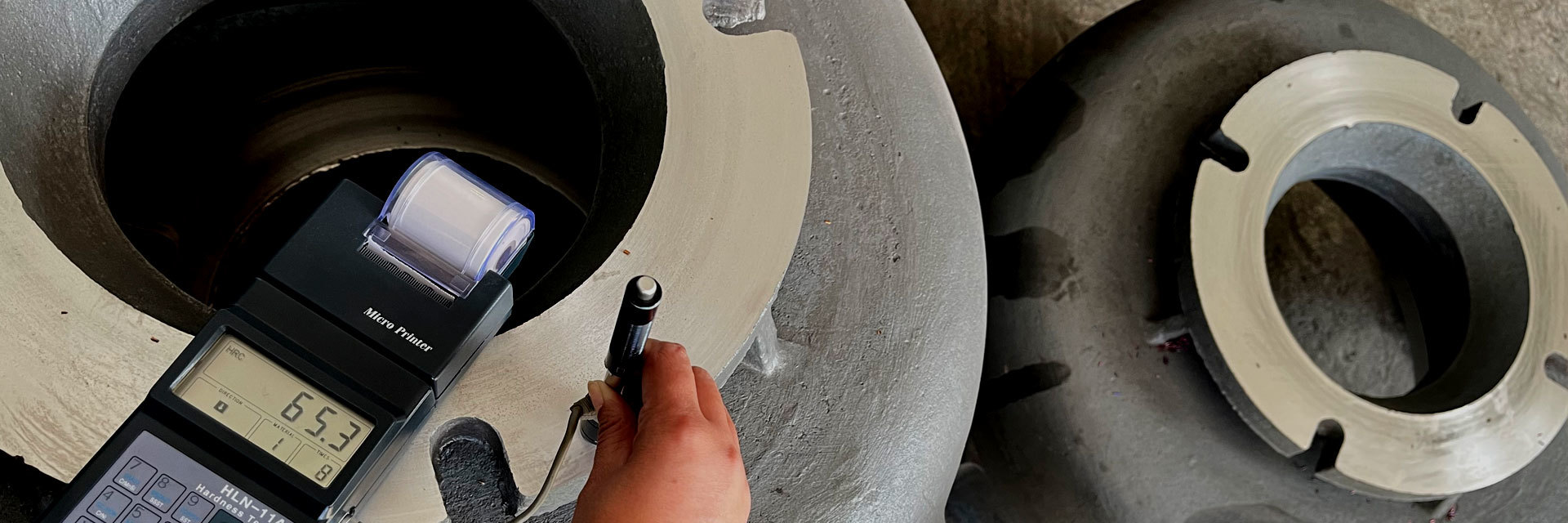
Solution
With strong manufacturing support and real application experience, we deliver practical solutions — not just pumps.
Frequently Asked Questions
How to repair the slurry pump?
As a widely used conveying equipment in industries such as mining, metallurgy, power, and coal, the stability and reliability of slurry pumps are crucial to the production process. However, long-term operation and harsh working environments often lead to various malfunctions of slurry pumps. Therefore, mastering the maintenance methods of slurry pumps is of great significance for ensuring the normal operation of equipment and extending its service life. This article will provide a detailed introduction to the maintenance steps, precautions, and common troubleshooting methods for slurry pumps.
Preparation work before maintenance of slurry pump
Before carrying out maintenance on the slurry pump, sufficient preparation work should be done first, including the implementation of safety measures, preparation of maintenance tools, and formulation of maintenance plans.
1. Safety measures: Ensure good ventilation at the maintenance site, wear personal protective equipment such as goggles, masks, gloves, etc., to avoid harm to the body caused by dust, noise, etc. generated during the maintenance process. At the same time, cut off the power and hang a "Do Not Close" warning sign to prevent accidental start-up.
2. Preparation of maintenance tools: Prepare corresponding tools according to different maintenance projects, such as screwdrivers, wrenches, hammers, vernier calipers, micrometers, magnetic gauge holders, dial indicators, etc. For parts that need to be replaced, they should be purchased in advance and their quality checked to ensure they meet the requirements.
3. Maintenance plan formulation: Based on the operating status and maintenance history of the equipment, analyze possible fault points and develop a detailed maintenance plan, including maintenance items, required materials, personnel division, time arrangement, etc.
Dismantling and Inspection of Slurry Pump?
Disassembly is an important part of the maintenance process, and the correct disassembly sequence and inspection method are crucial for the smooth progress of subsequent maintenance work.
1. Disassembly sequence: Disassemble according to the principle of from outside to inside and from top to bottom. First, remove the pipes, valves and other accessories connected to the slurry pump, and then gradually disassemble the pump body, impeller, bearings and other components. During the disassembly process, proper labeling should be done to avoid confusion.
2. Inspection and measurement: Carefully inspect the disassembled components, observe their wear, corrosion, deformation, etc., and use tools such as vernier calipers and micrometers to measure their dimensions and determine whether replacement is necessary. At the same time, check the wear level of vulnerable parts such as bearings and sealing rings, and replace them if necessary.
Treatment method for overheating of slurry pump bearings
The cause of bearing overheating may be poor lubrication, bearing damage, or improper installation. The solution is to check the lubrication condition of the bearings and promptly replenish or replace the lubricating oil; Check the installation of the bearings to ensure that their fit clearance meets the requirements; Damaged bearings should be replaced promptly.
Treatment method for shaft seal leakage of slurry pump
Shaft seal leakage is one of the common faults of slurry pumps, mainly caused by shaft seal wear, uneven sealing surface, or improper installation. The solution is to replace the worn shaft seals to ensure that the sealing surface is flat and smooth; Adjust the installation position of the shaft seal to ensure that the clearance between it and the shaft is appropriate; Check the clamping force of the shaft seal to ensure the sealing effect.
Treatment method for impeller wear of slurry pump
The impeller of the slurry pump is the core component of the slurry pump, and its wear directly affects the performance of the pump. The main cause of impeller wear is the erosion of solid particles in the medium. The treatment method is to regularly measure the wear of the impeller, and when the wear reaches a certain level, a new impeller should be replaced in a timely manner; For impellers with light wear, repair techniques such as welding and spraying can be used for repair.
Maintenance and assembly of slurry pump
During the maintenance process, the components should be cleaned, repaired, or replaced according to the maintenance plan, and then assembled.
1. Cleaning: Place the disassembled parts into a cleaning tank and use cleaning agents or high-pressure water guns to clean and remove surface dirt and oil stains. After cleaning, dry with a clean cloth or blow dry with compressed air.
2. Repair or replacement: Repair or replace worn, corroded, or damaged parts. The repair methods include welding, spraying, grinding, etc; For irreparable components, new ones should be replaced.
3. Assembly: Assemble in the reverse order of disassembly. During the assembly process, attention should be paid to parameters such as fitting clearance and tightening torque of each component to ensure assembly quality. At the same time, lubricate and seal vulnerable parts such as bearings and sealing rings.
Debugging and acceptance of slurry pump
After the maintenance is completed, it is necessary to debug and inspect the slurry pump to ensure that its performance meets the requirements.
1. Debugging: Start the slurry pump, observe its operation, and check whether the bearing temperature, shaft seal leakage, vibration, and noise are normal. If there is any abnormality, the machine should be stopped immediately for inspection and troubleshooting.
2. Acceptance: After passing the debugging, acceptance shall be carried out. The acceptance content includes the performance indicators, appearance quality, safety protection devices, etc. of the equipment. After passing the acceptance inspection, it can be put into use.
As a widely used conveying equipment in industries such as mining, metallurgy, power, and coal, the stability and reliability of slurry pumps are crucial to the production process. However, long-term operation and harsh working environments often lead to various malfunctions of slurry pumps. Therefore, mastering the maintenance methods of slurry pumps is of great significance for ensuring the normal operation of equipment and extending its service life. This article will provide a detailed introduction to the maintenance steps, precautions, and common troubleshooting methods for slurry pumps.
Before carrying out maintenance on the slurry pump, sufficient preparation work should be done first, including the implementation of safety measures, preparation of maintenance tools, and formulation of maintenance plans.
1. Safety measures: Ensure good ventilation at the maintenance site, wear personal protective equipment such as goggles, masks, gloves, etc., to avoid harm to the body caused by dust, noise, etc. generated during the maintenance process. At the same time, cut off the power and hang a "Do Not Close" warning sign to prevent accidental start-up.
2. Preparation of maintenance tools: Prepare corresponding tools according to different maintenance projects, such as screwdrivers, wrenches, hammers, vernier calipers, micrometers, magnetic gauge holders, dial indicators, etc. For parts that need to be replaced, they should be purchased in advance and their quality checked to ensure they meet the requirements.
3. Maintenance plan formulation: Based on the operating status and maintenance history of the equipment, analyze possible fault points and develop a detailed maintenance plan, including maintenance items, required materials, personnel division, time arrangement, etc.
Disassembly is an important part of the maintenance process, and the correct disassembly sequence and inspection method are crucial for the smooth progress of subsequent maintenance work.
1. Disassembly sequence: Disassemble according to the principle of from outside to inside and from top to bottom. First, remove the pipes, valves and other accessories connected to the slurry pump, and then gradually disassemble the pump body, impeller, bearings and other components. During the disassembly process, proper labeling should be done to avoid confusion.
2. Inspection and measurement: Carefully inspect the disassembled components, observe their wear, corrosion, deformation, etc., and use tools such as vernier calipers and micrometers to measure their dimensions and determine whether replacement is necessary. At the same time, check the wear level of vulnerable parts such as bearings and sealing rings, and replace them if necessary.
The cause of bearing overheating may be poor lubrication, bearing damage, or improper installation. The solution is to check the lubrication condition of the bearings and promptly replenish or replace the lubricating oil; Check the installation of the bearings to ensure that their fit clearance meets the requirements; Damaged bearings should be replaced promptly.
Shaft seal leakage is one of the common faults of slurry pumps, mainly caused by shaft seal wear, uneven sealing surface, or improper installation. The solution is to replace the worn shaft seals to ensure that the sealing surface is flat and smooth; Adjust the installation position of the shaft seal to ensure that the clearance between it and the shaft is appropriate; Check the clamping force of the shaft seal to ensure the sealing effect.
The impeller of the slurry pump is the core component of the slurry pump, and its wear directly affects the performance of the pump. The main cause of impeller wear is the erosion of solid particles in the medium. The treatment method is to regularly measure the wear of the impeller, and when the wear reaches a certain level, a new impeller should be replaced in a timely manner; For impellers with light wear, repair techniques such as welding and spraying can be used for repair.


